Start With The Fault, Not A Guess
Forklift repair begins with understanding what has changed. A truck that will not start, loses lift performance or displays a fault code may have several possible causes. Supply the symptoms and when they occur rather than ordering a component on the assumption that it is responsible.
Include the truck's make, model, serial number, power source and hour reading. A photograph of the identification plate and a clearly recorded fault code can help identify the equipment. Do not repeatedly restart or operate a machine to reproduce a fault if doing so could expose anyone to danger.
Common Repair Enquiries
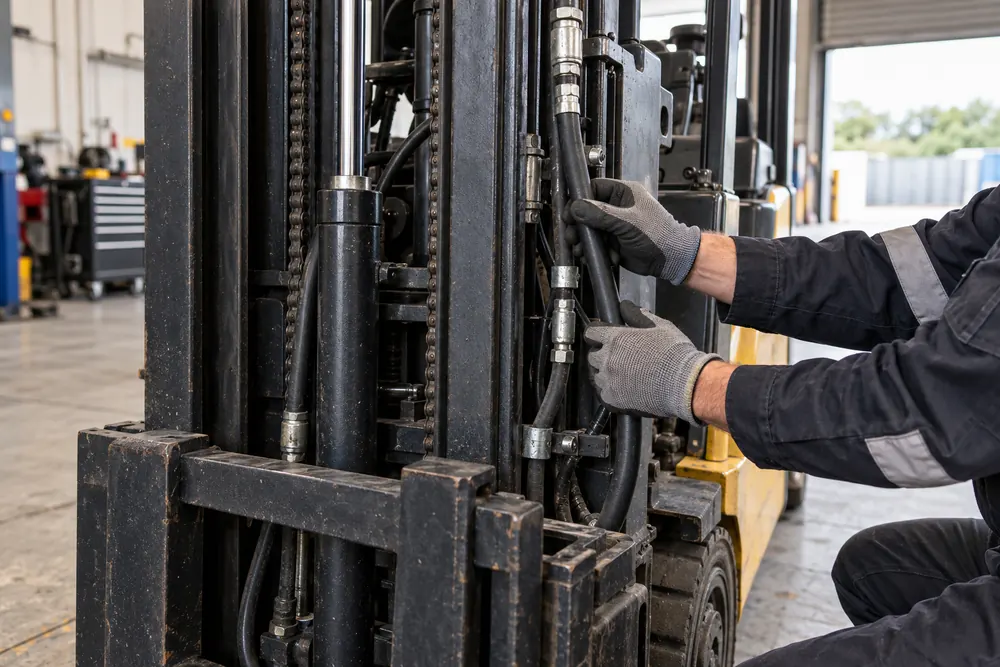
Hydraulic leaks, damaged hoses, inconsistent lifting and mast movement need assessment of the affected system. Electrical faults may involve power supply, connectors, controls or the battery and charger relationship. Brake, steering, wheel and drive issues require a different diagnostic approach, so describe exactly what the operator noticed.
Impact damage should be reported even if the machine still moves. Bent forks, damaged guards or unusual mast alignment cannot be dismissed because a load can still be lifted. Describe the incident honestly and identify any attachments involved, since a change in configuration can alter both the repair scope and the required checks.
Make The Area Safe First
If a fault could affect safe use, stop the truck and keep it out of service. Lower the forks where this can be done safely, secure the equipment and follow your site's isolation procedure. If a load is stuck raised or the truck is unstable, keep people clear and seek competent assistance.
Repairs must be planned around stored hydraulic energy, batteries, moving components and the risk of unexpected movement. Do not work beneath unsupported equipment or improvise a way to bypass safety controls. Give the engineer a safe working area and describe access restrictions before any attendance is agreed.
Repair Duties And Examination
PUWER sets duties for maintaining work equipment and carrying out maintenance safely. A repair should use appropriate parts and procedures, with the work recorded and the machine checked before release. A fault disappearing from the display is not, by itself, evidence that the underlying problem has been resolved.
LOLER may also require thorough examination following particular repairs, damage or exceptional circumstances. Ask whether the affected components or event trigger that requirement before returning the truck to service. HSE's guidance on examination and defects is a useful reference when deciding the additional actions needed after repair.
How Diagnosis And Repair Progress
First, send your fault description, site postcode and equipment details. The available information is reviewed to decide what diagnostic support and access are needed. Diagnosis then establishes the cause and a proposed scope, including parts availability, workshop work if needed and any further tests.
Review the quotation and authorise the agreed work before parts are fitted. When repairs are complete, obtain a record of findings, components replaced and functional checks, plus any restrictions or follow-up recommendations. Where downtime affects operations, a separate forklift hire enquiry can be considered without assuming a substitute machine is already available.
What Changes Forklift Repair Cost
Forklift repair cost depends on the fault, diagnostic time, parts, labour and whether the work can be completed safely on site. Specialist electronic components, battery faults or major mechanical damage can need a different approach from a simple consumable replacement. Transport may be required if workshop facilities are needed.
Ask how initial diagnosis is charged and what approval will be sought if the scope changes. Confirm the treatment of travel, additional visits, disposal and post-repair examination where relevant. Clear authorisation points protect your budget while allowing the repairer to respond properly to findings that were not visible at the first enquiry.
Safety references: HSE: PUWER, HSE: Lift-Truck Thorough Examination, HSE: Lift-Truck Training and HSE: Examination And Defects.
Forklift Repair Questions
What Information Helps With Forklift Repair?
Forklift repair enquiries are easier to assess with the make, model, serial number, power type and a description of the fault. Include displayed codes and whether the problem occurs during travel, lifting or charging. Send photographs only where safe, and explain whether the truck is parked securely or has a raised load.
Can I Keep Using A Forklift With A Hydraulic Leak?
A forklift with a hydraulic leak needs a safety assessment before further use. Stop and report the defect if it could affect lifting, steering, braking or anyone nearby. Do not touch a pressurised leak or attempt to identify it with your hand, and keep the machine out of service until competent advice confirms the next step.
Will My Forklift Need Examination After Repair?
A forklift may need thorough examination after repair depending on the components affected and the circumstances. Damage, significant changes and work on lifting parts can require additional examination before use. Ask the repairer and competent examiner to confirm what applies to your truck rather than assuming a repair invoice is sufficient clearance to operate.
Planning work at a London site? Check our areas covered and send your equipment requirement with the postcode.